> For the complete documentation index, see [llms.txt](https://kdongs.gitbook.io/kdocs/llms.txt). Markdown versions of documentation pages are available by appending `.md` to page URLs; this page is available as [Markdown](https://kdongs.gitbook.io/kdocs/kong-api-gateway/kong-api-gateway.md).
# Kong API Gateway
{% embed url="" %}
## About
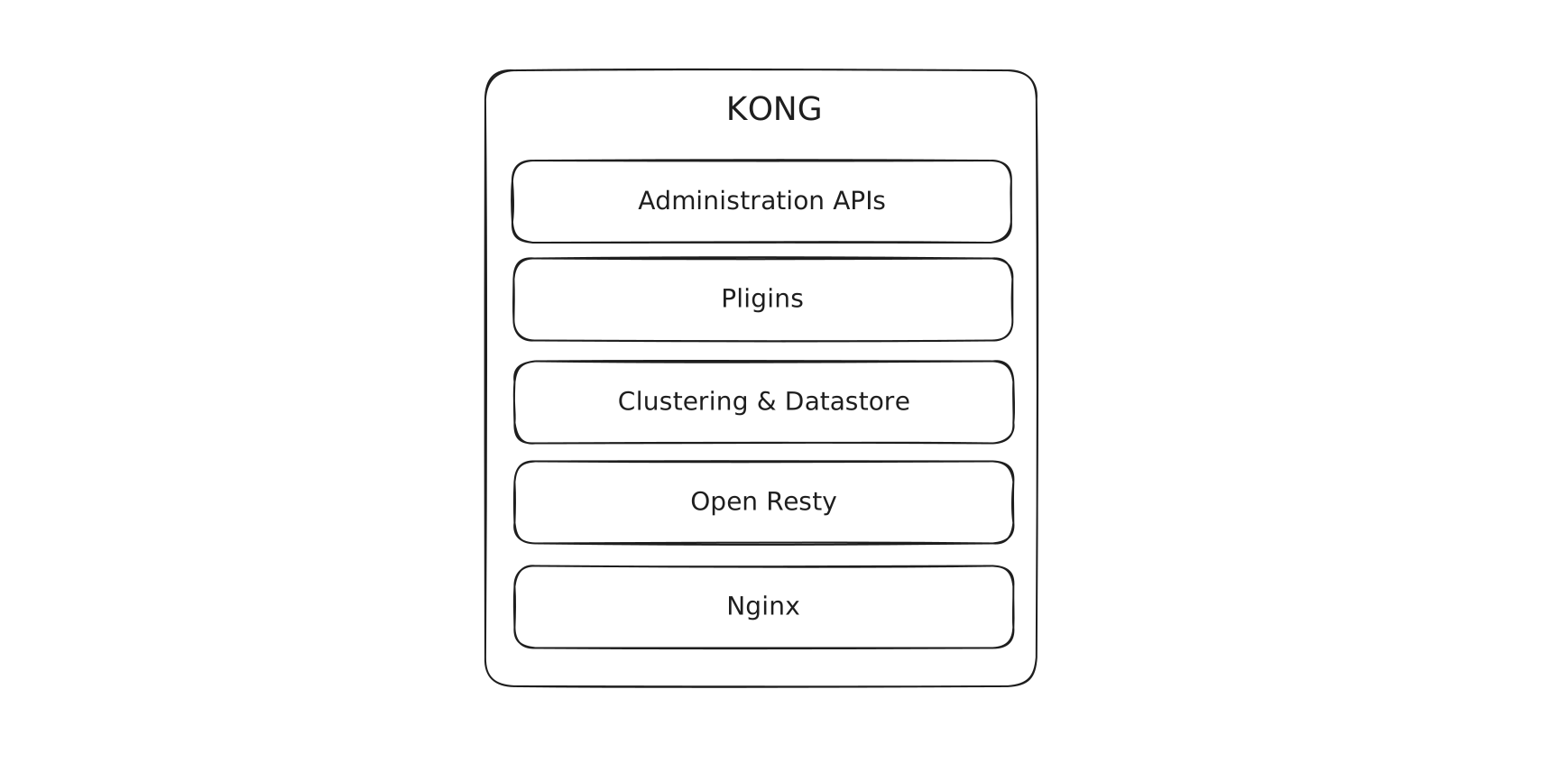
An open source API Gateway, with characteristics of a [API Gateway](/kdocs/api-gateway/api-gateway.md#micro-gateways).
It has flexible deployment *(meaning it can be used not only at the architecture's edge, but also managing Services integrations)*, Kubernetes ready and it is also extensible with Plugins.
 ## Deployment Models
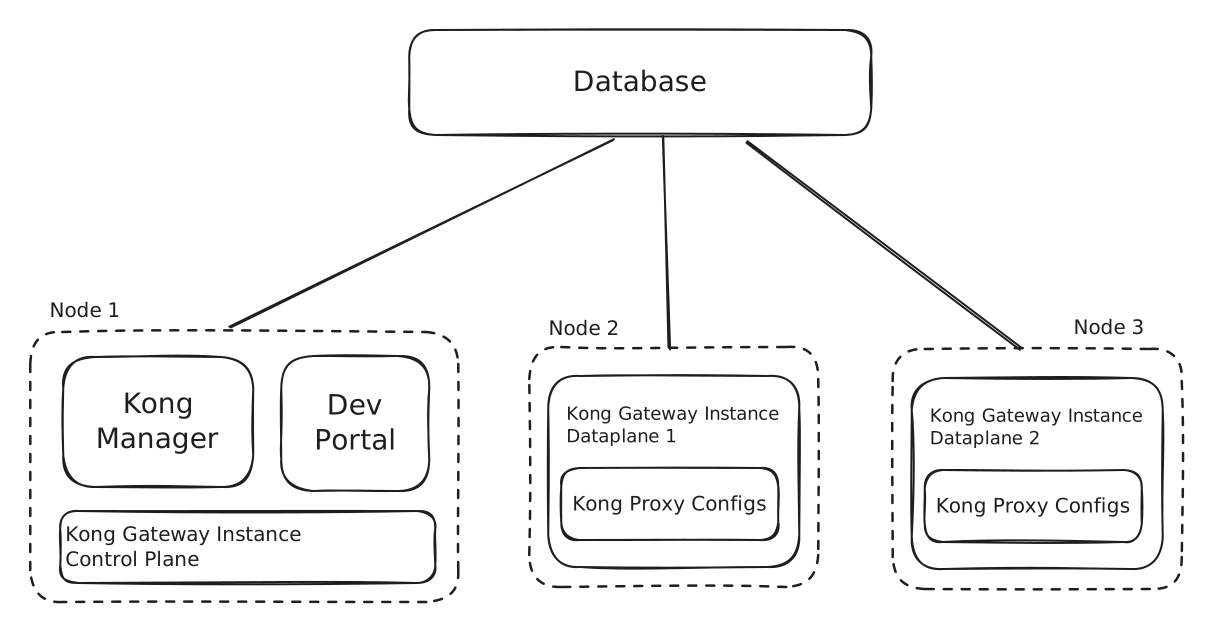
### Distributed
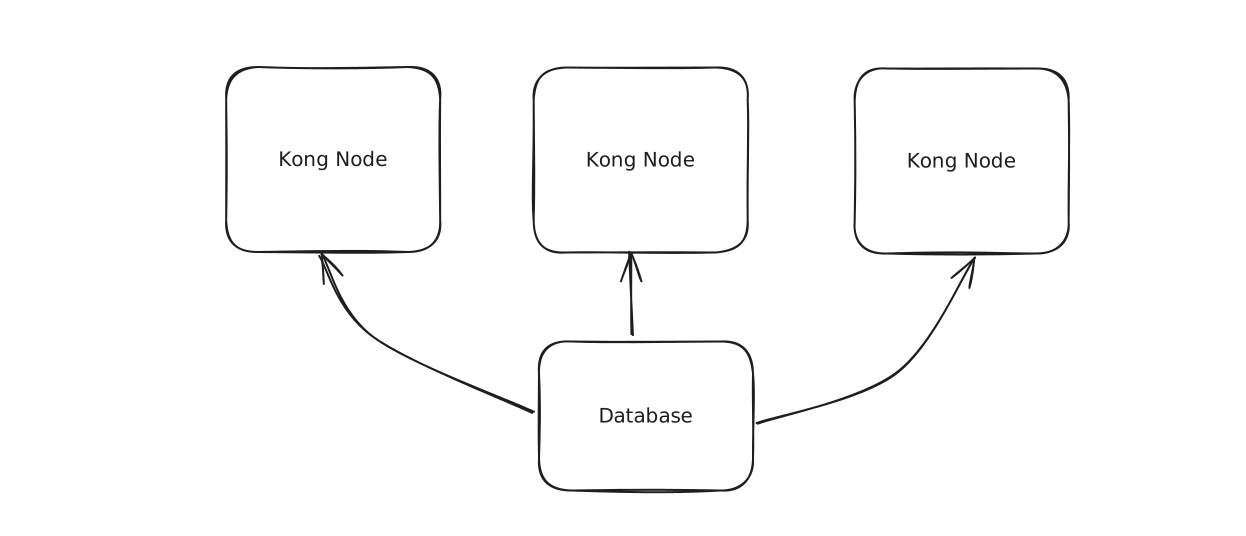
All Kong instances have access to the database.
{% hint style="info" %}
This distributed deployment mode is only available at paid enterprise version.
{% endhint %}
## Deployment Models
### Distributed
All Kong instances have access to the database.
{% hint style="info" %}
This distributed deployment mode is only available at paid enterprise version.
{% endhint %}
 ### Hybrid
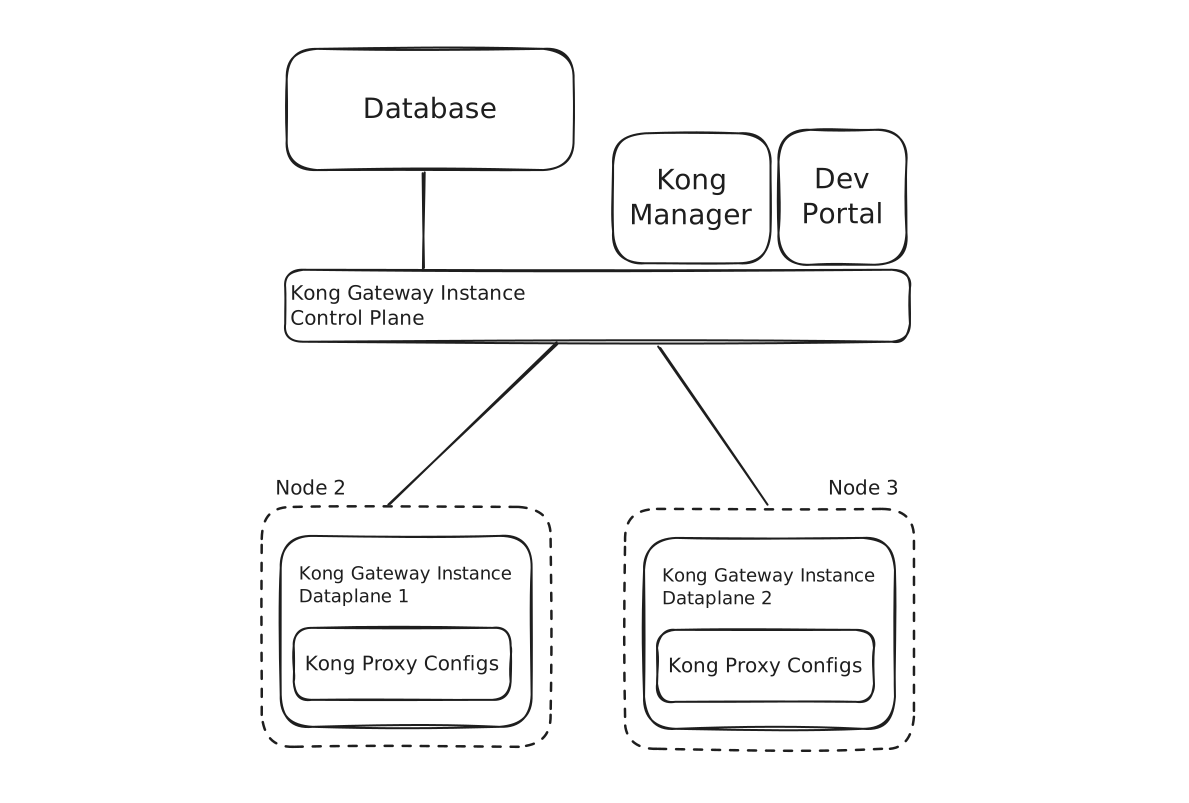
The recommended model, where only the Control Plane access the Database, reducing usage of the database.
### Hybrid
The recommended model, where only the Control Plane access the Database, reducing usage of the database.
 ### DB-Less
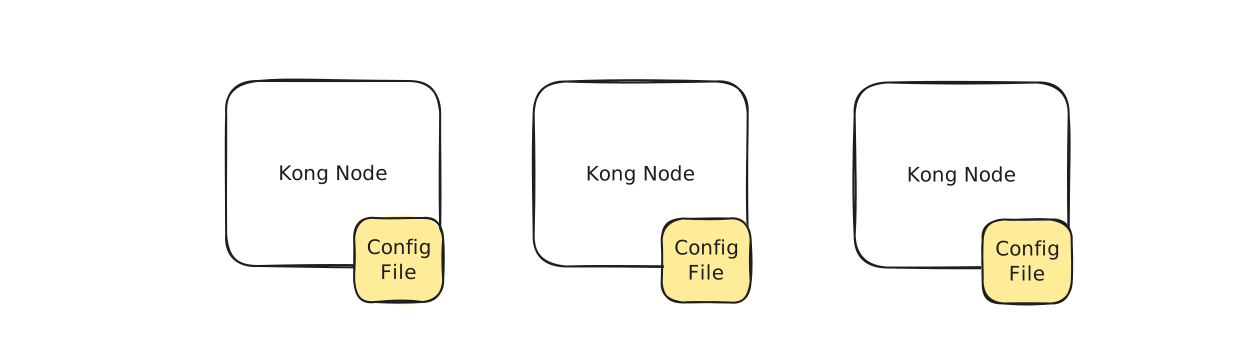
The source of truth is the declarative `.yaml` or `.json` file that includes all the configuration and that is parsed in-memory when Kong starts.
{% hint style="danger" %}
Some Kong Plugins are not compatible with `Db-Less`.
{% endhint %}
### DB-Less
The source of truth is the declarative `.yaml` or `.json` file that includes all the configuration and that is parsed in-memory when Kong starts.
{% hint style="danger" %}
Some Kong Plugins are not compatible with `Db-Less`.
{% endhint %}
 ### With Database
The source of truth is the shared datase (postgreSQL or Cassandra) that is a required dependency for every Kong node in the same cluster.
### With Database
The source of truth is the shared datase (postgreSQL or Cassandra) that is a required dependency for every Kong node in the same cluster.
 ## Getting Started
### [Kong Services](https://docs.konghq.com/gateway/3.9.x/key-concepts/services/)
A service is an entity that represents an (API or Microservice) `upstream`. *(Ex.: An Invoice Microservice)*
{% hint style="info" %}
An `upstream` is always your available API or Microservice.
{% endhint %}
When configuring a service you can specify:
* Service name;
* Description of service;
* Tags;
* Url that will be used to reach the API or Microservice inside the network *(Ex.:* `http://api-container:3000`*)*;
* Retries, amount of retries for a request to try reaching the service;
* Connection timeout;
* etc.
#### [Rate Limiting](https://docs.konghq.com/gateway/3.9.x/get-started/rate-limiting/)
Rate Limiting can be done on the Service level, by configuring the plugin for each Service.
{% hint style="danger" %}
Always hide headers for `too many requests`.
{% endhint %}
Check more on the docs.
### [Kong Routes](https://docs.konghq.com/gateway/3.9.x/key-concepts/routes/)
A Route is how *(the URL)* Kong will reach the Service.
You create Routes from inside the Service panel in `Konga`.
{% hint style="warning" %}
Just setting up the `url` in the service is not enough.
You have to explicitly create a Route to the upstream.
{% endhint %}
When configuring a route the main configurations are:
* Route name;
* Route tags;
* Route `host` *(a list of hosts)*, a `header` variable that must be sent on the request *(Ex.:* `{ Host: api-url.com }`*) (**If configured,** it MUST be sent on the request headers);*
* Route `paths` (a list of paths), very important, which is part of the URL that comes from the `downstream` *(Ex.: /api/v1);*
* etc.
With `host` and `paths` you can route different URLs to different services.
### [Kong Consumers](https://docs.konghq.com/gateway/3.9.x/key-concepts/consumers/)
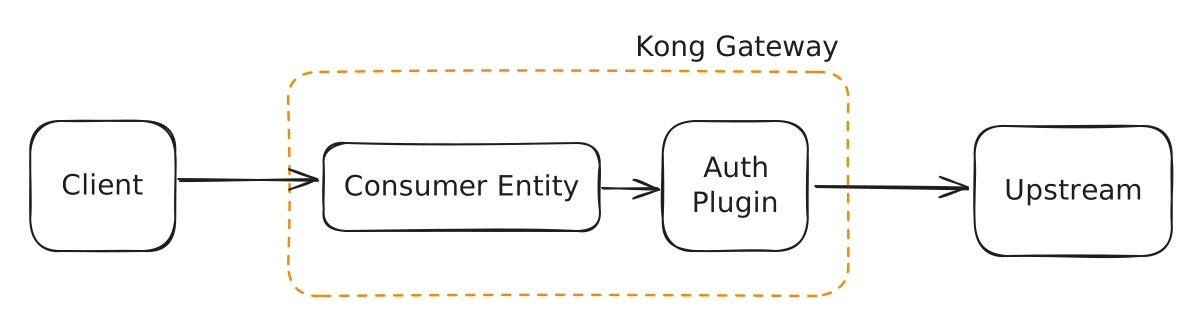
A consumer typically refers to an entity that consumes or uses the APIs managed by Kong Gateway. *(Like applications, services, or users)*
Kong allows you to manage them, apply access control policies, and monitor their API usage.
They are identified by key authorization, OAuth, or other authentication and authorization mechanisms.
## Getting Started
### [Kong Services](https://docs.konghq.com/gateway/3.9.x/key-concepts/services/)
A service is an entity that represents an (API or Microservice) `upstream`. *(Ex.: An Invoice Microservice)*
{% hint style="info" %}
An `upstream` is always your available API or Microservice.
{% endhint %}
When configuring a service you can specify:
* Service name;
* Description of service;
* Tags;
* Url that will be used to reach the API or Microservice inside the network *(Ex.:* `http://api-container:3000`*)*;
* Retries, amount of retries for a request to try reaching the service;
* Connection timeout;
* etc.
#### [Rate Limiting](https://docs.konghq.com/gateway/3.9.x/get-started/rate-limiting/)
Rate Limiting can be done on the Service level, by configuring the plugin for each Service.
{% hint style="danger" %}
Always hide headers for `too many requests`.
{% endhint %}
Check more on the docs.
### [Kong Routes](https://docs.konghq.com/gateway/3.9.x/key-concepts/routes/)
A Route is how *(the URL)* Kong will reach the Service.
You create Routes from inside the Service panel in `Konga`.
{% hint style="warning" %}
Just setting up the `url` in the service is not enough.
You have to explicitly create a Route to the upstream.
{% endhint %}
When configuring a route the main configurations are:
* Route name;
* Route tags;
* Route `host` *(a list of hosts)*, a `header` variable that must be sent on the request *(Ex.:* `{ Host: api-url.com }`*) (**If configured,** it MUST be sent on the request headers);*
* Route `paths` (a list of paths), very important, which is part of the URL that comes from the `downstream` *(Ex.: /api/v1);*
* etc.
With `host` and `paths` you can route different URLs to different services.
### [Kong Consumers](https://docs.konghq.com/gateway/3.9.x/key-concepts/consumers/)
A consumer typically refers to an entity that consumes or uses the APIs managed by Kong Gateway. *(Like applications, services, or users)*
Kong allows you to manage them, apply access control policies, and monitor their API usage.
They are identified by key authorization, OAuth, or other authentication and authorization mechanisms.
 ### [Kong Plugins](https://docs.konghq.com/gateway/3.9.x/key-concepts/plugins/)
They provide additional functionality and extend the use of Kong.
You may create plugins in `go`, `python`, `javascript` and `lua`.
Check third-party plugins available [here](https://docs.konghq.com/hub/).
## [Konga](https://pantsel.github.io/konga/)
Konga is an Admin Interface for Kong API Gateway, useful to see Kong instance's metrics and do user management.
It can also manage multiple Kongs.
### [Kong Plugins](https://docs.konghq.com/gateway/3.9.x/key-concepts/plugins/)
They provide additional functionality and extend the use of Kong.
You may create plugins in `go`, `python`, `javascript` and `lua`.
Check third-party plugins available [here](https://docs.konghq.com/hub/).
## [Konga](https://pantsel.github.io/konga/)
Konga is an Admin Interface for Kong API Gateway, useful to see Kong instance's metrics and do user management.
It can also manage multiple Kongs.