# Dissection the Scrum Structure
## How scrum transforms ideas into values
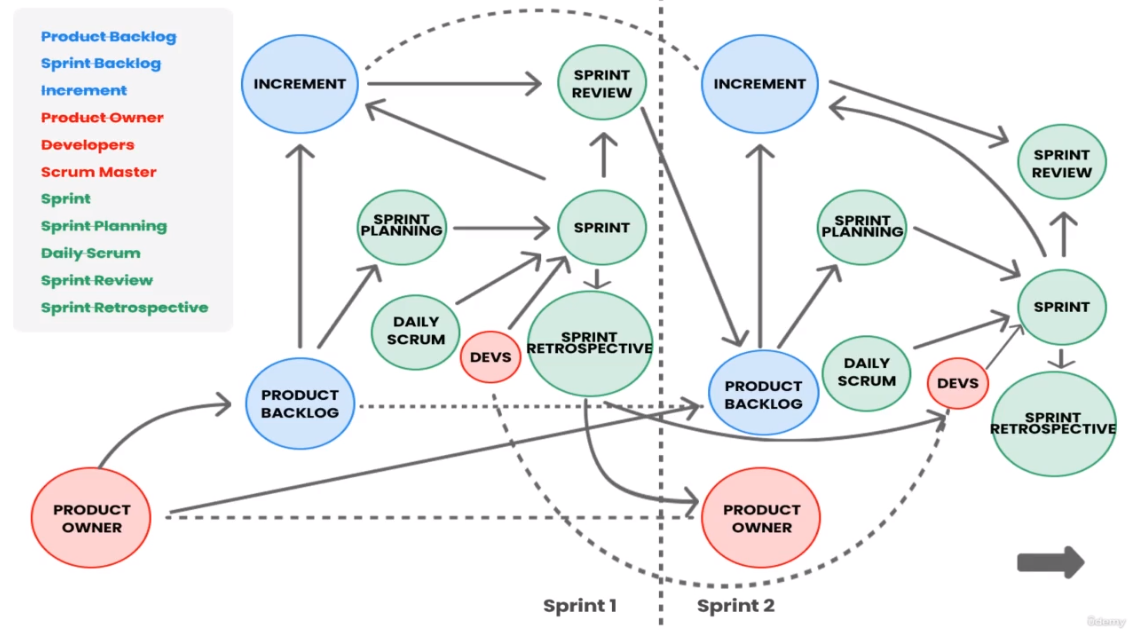
We start with a set of ideas and transform them into Value by working.
## Artifacts
### **Product Backlog**
Is where all the ideias are stored.\
It is not intended for documentation itself but to bring transparency to the process and create alignment between business and technical people.
The feasibility of delivering value is highly affected by the quality of the product backlog.
It is not only refined and changed after sprint reviews, its refinement is an ongoing process in which the scrum team collaborates on the details of the product backlog items.
Although the PO is the one accountable for it, the developers are the ones responsible for the sizing of the products backlog items. The PO may influence them by helping them understand and select trade-offs.
### **Sprint Backlog**
It is the backlog generated from the sprint planning, that holds:
* The scrum team agrees on a sprint goal;
* Selects a set of product backlog items, to be worked on during the sprint;
* Defines an actionable plan for delivering the increment;
### **Increment**
Is the outcome of a sprint.\
The increment is a vertical delivery, having all the layers as part of the product.\
The increment is Scrum's way of manifesting real value. (This is where the **work is done**)\
It is possible to have multiple increments in a sprint.
In complex problems, asking user what they want is not enough. They will only know when IKIWISI.
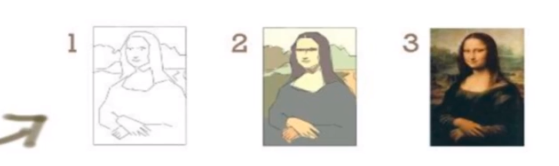
#### **Horizontal delivery (Iterative)**
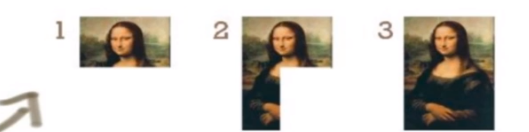
#### **Vertical delivery (Incremental)**
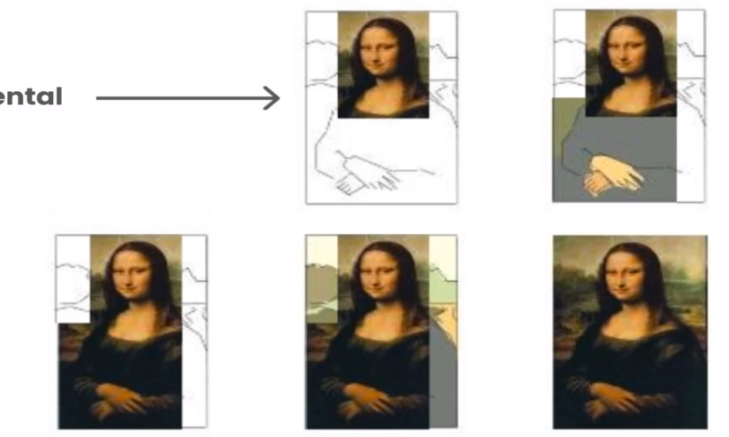
Since Scrum is both Iterative and Incremental it looks something like this:
## Accountabilities
### **Product Owner**
Is the single person accountable for defining what will be done and in what sequence.\
He needs to write a good product backlog.\
He needs to collaborate with the Scrum team and stakeholders.
### **Developers**
Are the ones that get the work done.\
They directly work to deliver the increments.
### **Scrum Master**
Good Scrum Masters are invisible.\
They do not get in the way of the other team members, but empower them.\
They observe and support the scrum team making scrum work effectively.
One of their jobs is to detect incomplete transparency by inspecting the artifacts, sensing patterns, listening closely to what is being said, and detecting differences between expected and real results.
## Events
### **Sprint**
Lasts at most one month.
### **Sprint Planning**
Is the first thing done in the beginning of a Sprint.\ Lasts at most 8 hours.
* The scrum team agrees on a sprint goal;
* Selects a set of product backlog items, to be worked on during the sprint;
* Defines an actionable plan for delivering the increment;
### **Daily Scrum**
Each day during the sprint, the developers hold this daily scrum.\ Lasts at most 15 minutes.
A quick way for the developers to discuss how to optimize its chances to reach the sprints goal.
### **Sprint Review**
A event at the end of the Sprint, lasting at most 4 hours.
It is when the scrum team gets along with stakeholders to discuss the product being developed, including what was developed during the sprint and future adaptations.
### **Sprint Retrospective**
A event a the end of the Sprint, lasting at most 3 hours.
It closes the Sprint by having the scrum team reflect on how to improve its ways of working.\ Is about inspecting and adapting the scrum team itself, focusing on making it more effective and increasing the resulting quality.
This includes increase effectiveness of:
* Product Owner
* Developers
## The Definition of Done
More info here [#the-definition-of-done-1](#the-definition-of-done-1 "mention").
It defines what Done means for the increment.\ It must brings balance between delivering fast and with quality.
At the end of every sprint the team needs to deliver ***Done*** increments, and ***'Done'*** might mean different things to different people.
So to ensure visibility, transparency and understanding of what mens for *'work to be done'*, the scrum team must agree on a Definition of Done.
### Flaccid Scrum
It is an Anti-pattern that reflects the behavior of teams that focus too much on delivering features as fast as possible while compromising quality.