# Hash Maps
## Terminology
| `load factor` | The amount of data points vs the amount of storage. (`data.len` / `storage.capacity`) |
| ------------- | --------------------------------------------------------------------------------------- |
| `key` | A value that is hashable and is used to look up data. *(The hash has to be consistent)* |
| `value` | A value that is associated with a key. |
| `collision` | When 2 keys map to the same cell. |
## Hashing
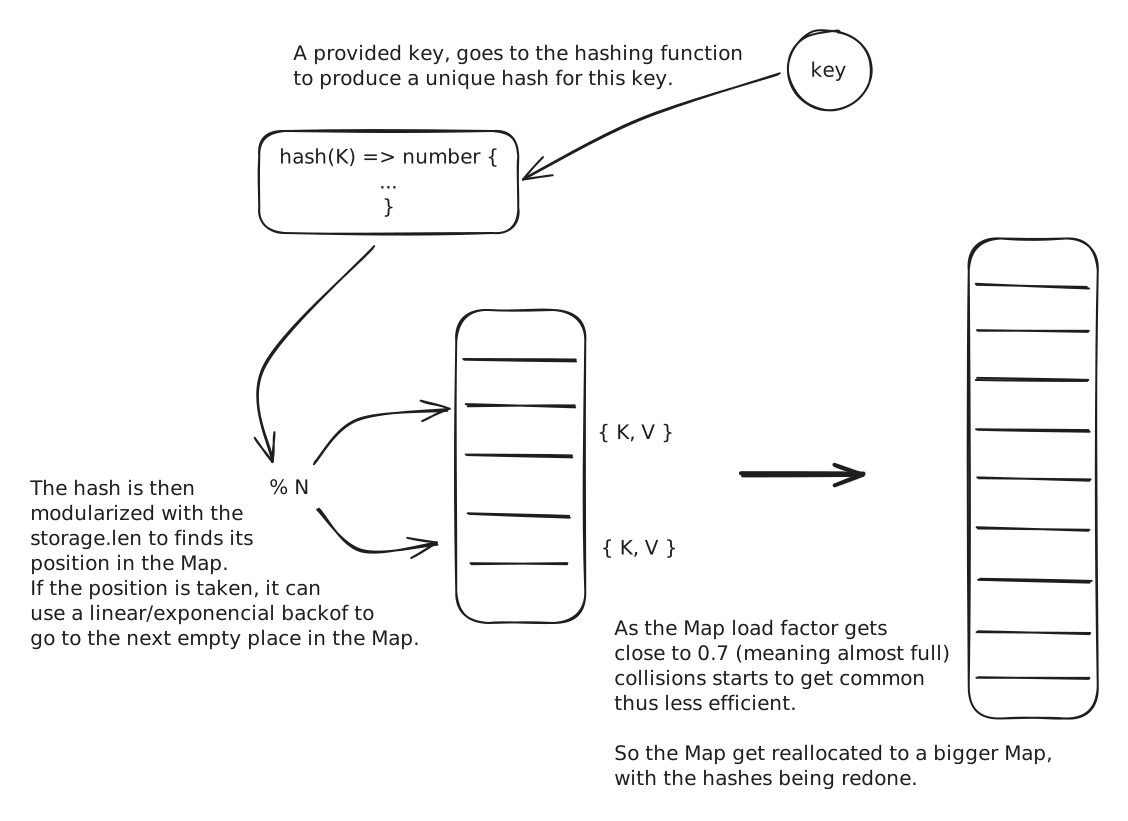
Because a Map has a limited amount of space, hashing keys will most certainly end up in collisions of hashes.
The collision happens because the produced hash will have to be modularized so that it always points to a valid slot in the Map.
{% hint style="info" %}
The less collision hashes a hash function generates, the closest to $$O(1)$$ the hashmap can stay for its operations.
{% endhint %}
There are several ways of dealing with collisions, for instace:
### Backof
 ### Avoiding backof
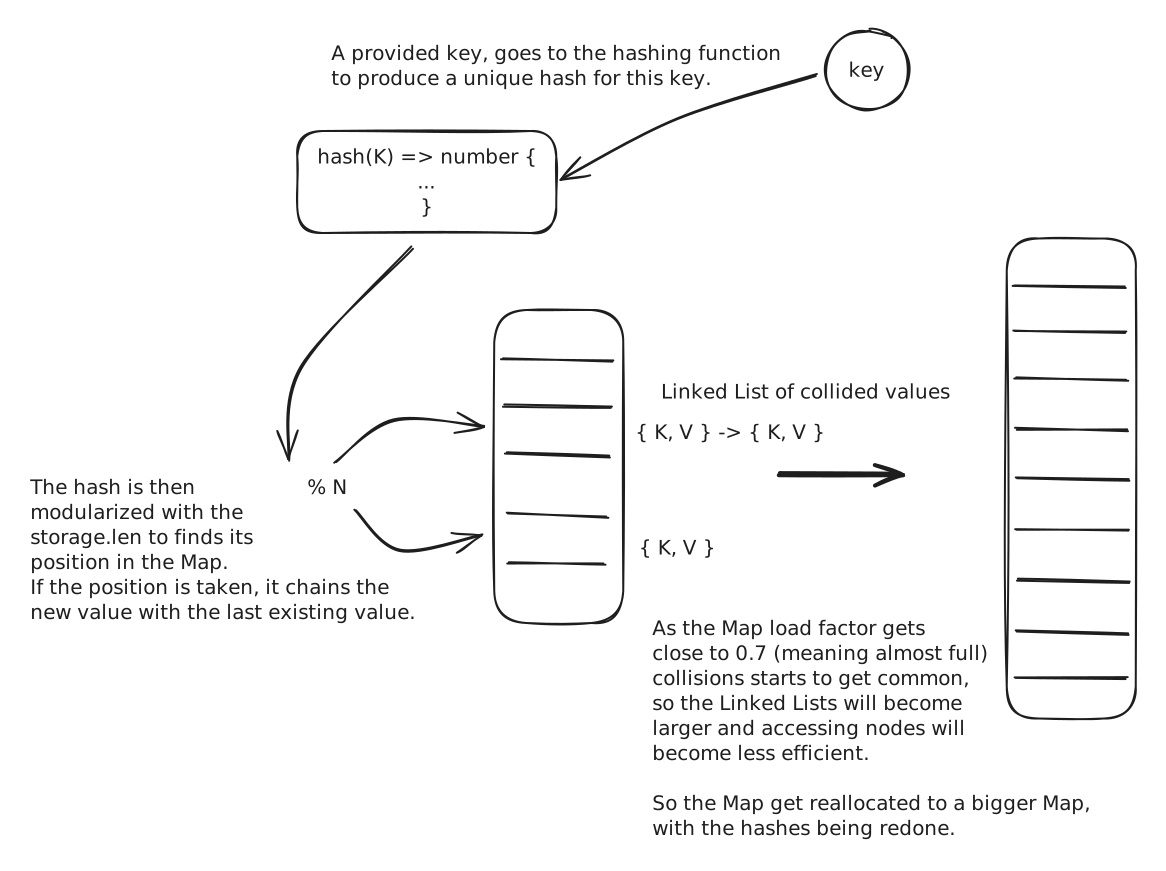
A way to avoid the linear or exponencial backof when two hashes collide, is to make these colliding hashes to ocupy the same slot in the Map, instead of finding an unocuppied slot.
Meaning that a slot would consist of a Linked List or similar DS.
### Avoiding backof
A way to avoid the linear or exponencial backof when two hashes collide, is to make these colliding hashes to ocupy the same slot in the Map, instead of finding an unocuppied slot.
Meaning that a slot would consist of a Linked List or similar DS.
 ## Growing Maps Data Storage
As the Data Storage become close to full, the number of collisions increase, thus making the Map less efficient, no matter the strategy used for dealing with collisions.
{% hint style="info" %}
The bigger the `load factor` the less $$O(1)$$ the Map is.
{% endhint %}
The ideal limit `load factor` is about 0.7. Above that value, the Data Storage should grow.
Growing the Data Storage means, re-hashing all the existing `{ key, value }`.
## Implementation
## Growing Maps Data Storage
As the Data Storage become close to full, the number of collisions increase, thus making the Map less efficient, no matter the strategy used for dealing with collisions.
{% hint style="info" %}
The bigger the `load factor` the less $$O(1)$$ the Map is.
{% endhint %}
The ideal limit `load factor` is about 0.7. Above that value, the Data Storage should grow.
Growing the Data Storage means, re-hashing all the existing `{ key, value }`.
## Implementation